

The web prototype demo link is here:
https://three-quick.vercel.app

Problem
With Cadillac’s sponsorship, our team explored how future mobility could embody Cadillac’s vision in 2045. Cadillac represents Bold Elegance, a harmony between power and sophistication, and believes that future luxury will be defined by quiet, seamless technological experiences.
What does luxury mobility mean for Cadillac in the year 2045?
UX Research & User Interviews Findings
Persona
As the next step, we created a persona to better understand what a day in 2045 might look like. We all became Destiny for a moment, imagining her future life. With Cadillac always by her side, what advanced technologies and products would she experience every day? Exploring these ideas was both inspiring and exciting.
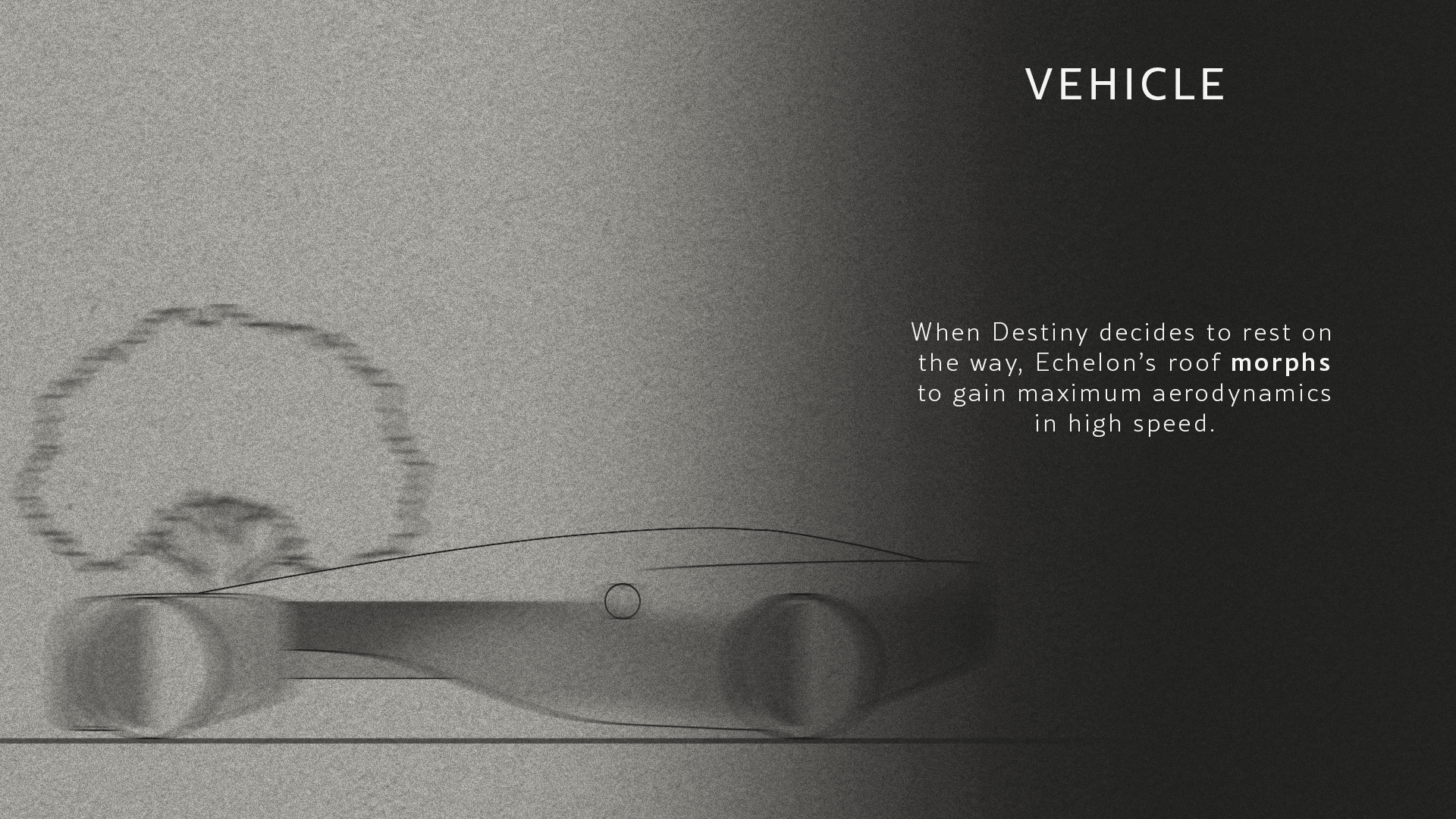
Destiny is a successful architect designing Cadillac residencies, constantly moving from one meeting to the next. While traveling in her VTOL vehicle and Vehicle, she continues to collaborate, plan, and stay productive on the go. An AI assistant robot is always by her side, supporting her and managing her daily life. Meanwhile, her smart chair monitors her health, switches to relaxation mode when needed, and helps maximize her efficiency.
All of these touchpoints are seamlessly connected within the Cadillac ecosystem, ensuring that Destiny enjoys a smooth, smart, and luxurious experience anytime, anywhere.

Storyboard
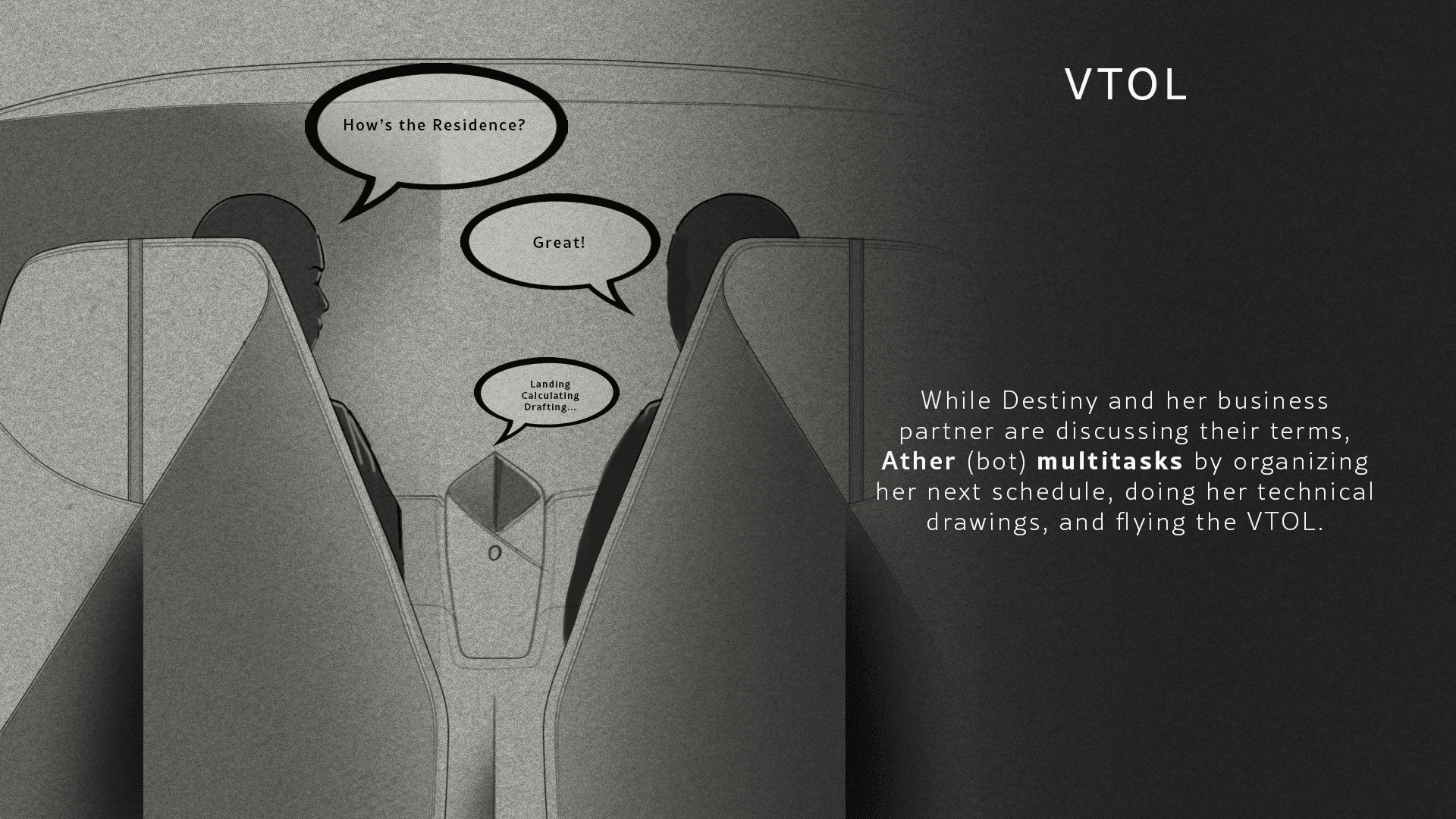
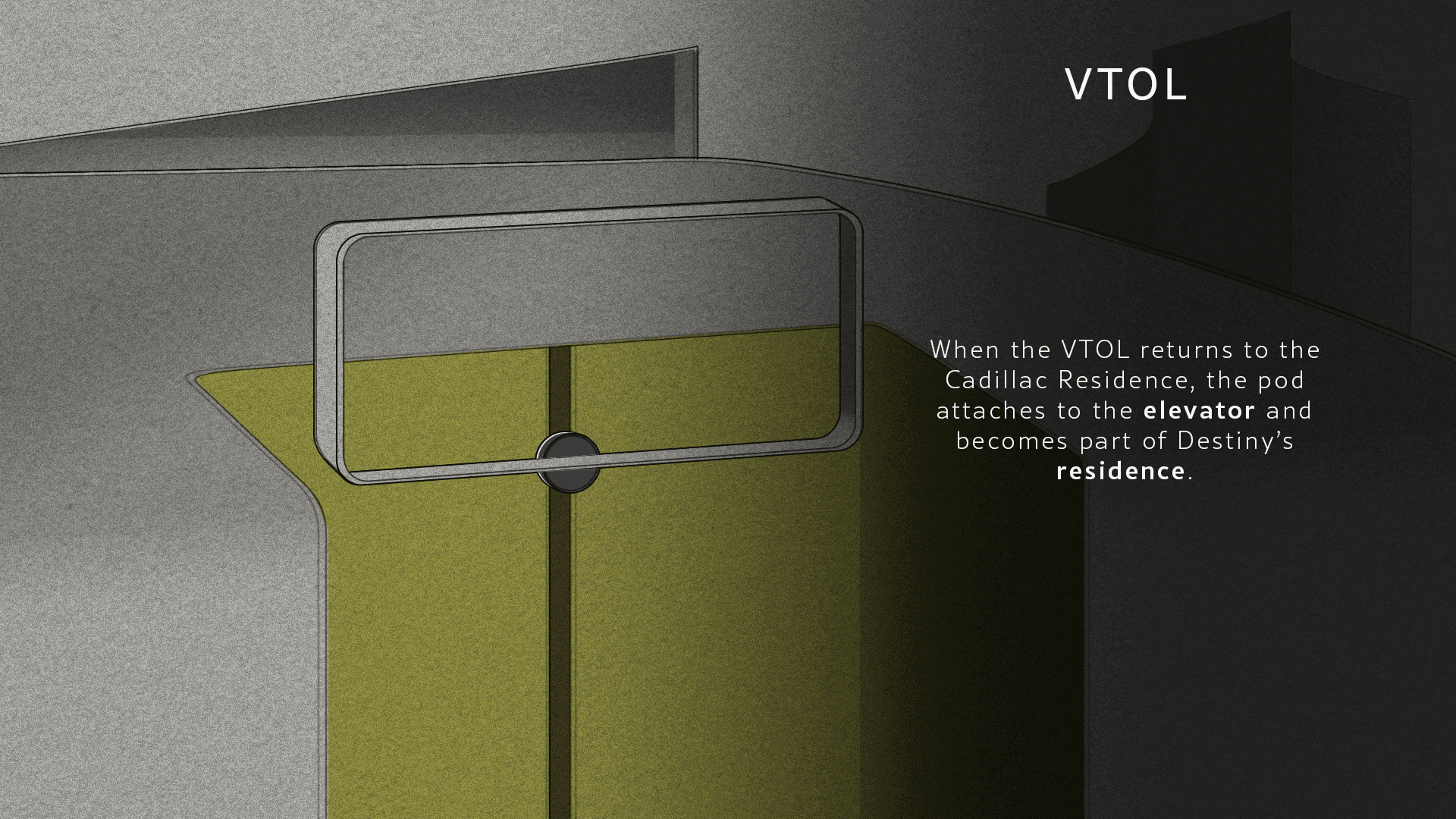
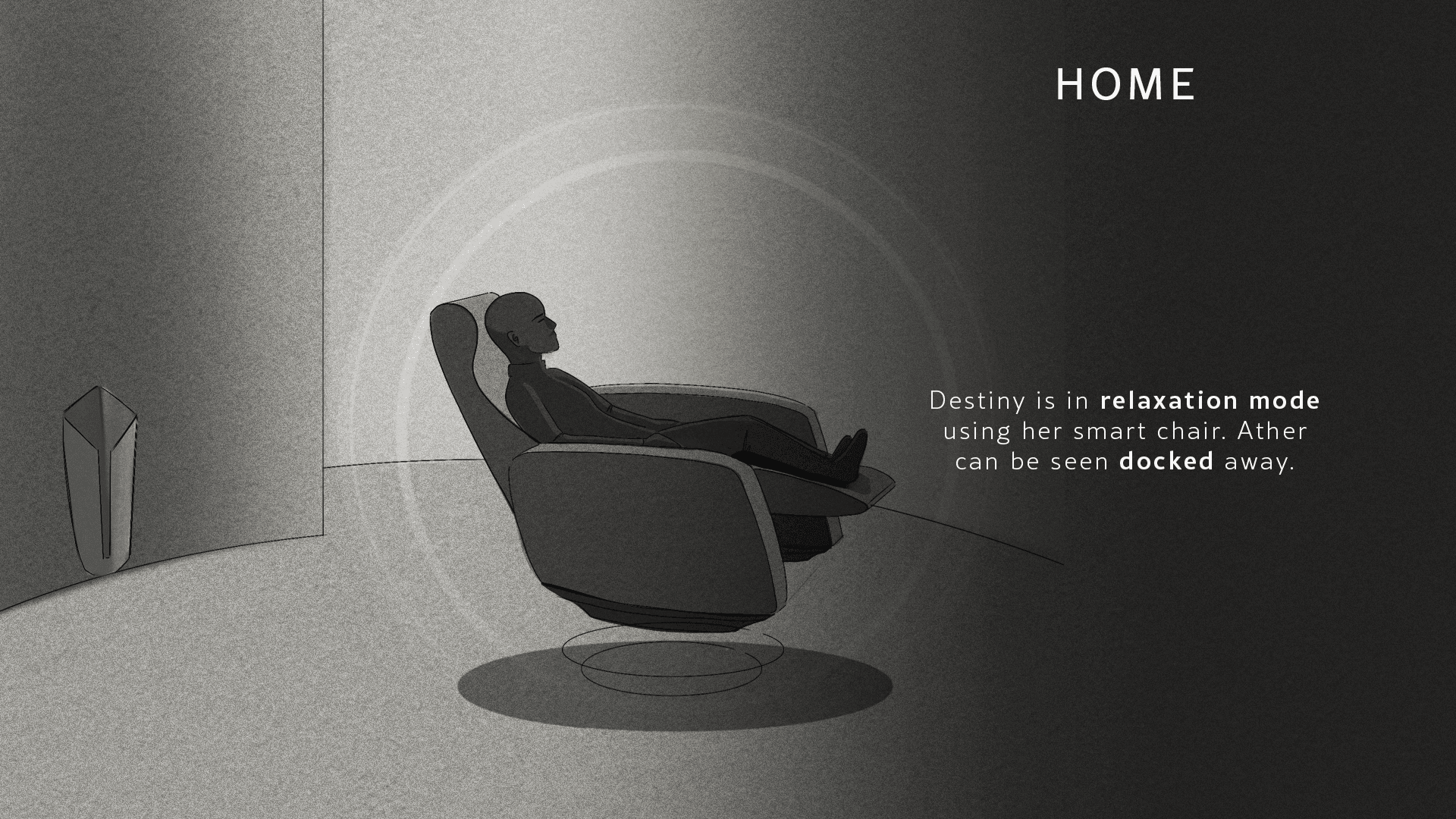
We decided to focus on three key moments in Destiny’s daily life: working inside the vehicle, meeting at home, and taking time to rest.
The reason for this focus was that work occupies the largest portion of her busy schedule, and it was important to show how this process could be made more efficient. At the same time, we recognized that her intense workload would require attention to health and well-being, which we considered to be a growing priority for future lifestyles.
In today’s world, vehicles require full attention to driving. But in the future, we envisioned vehicles as multi-purpose spaces where not only commuting, but also work, wellness, and relaxation could seamlessly coexist. Our goal was to demonstrate this transformation.


Design Inspirations
For decades, Cadillac has embraced “Bold Elegance” as its design ethos, often expressed visually through the use of strong, linear forms. These bold lines communicate both luxury and technological advancement at the same time.
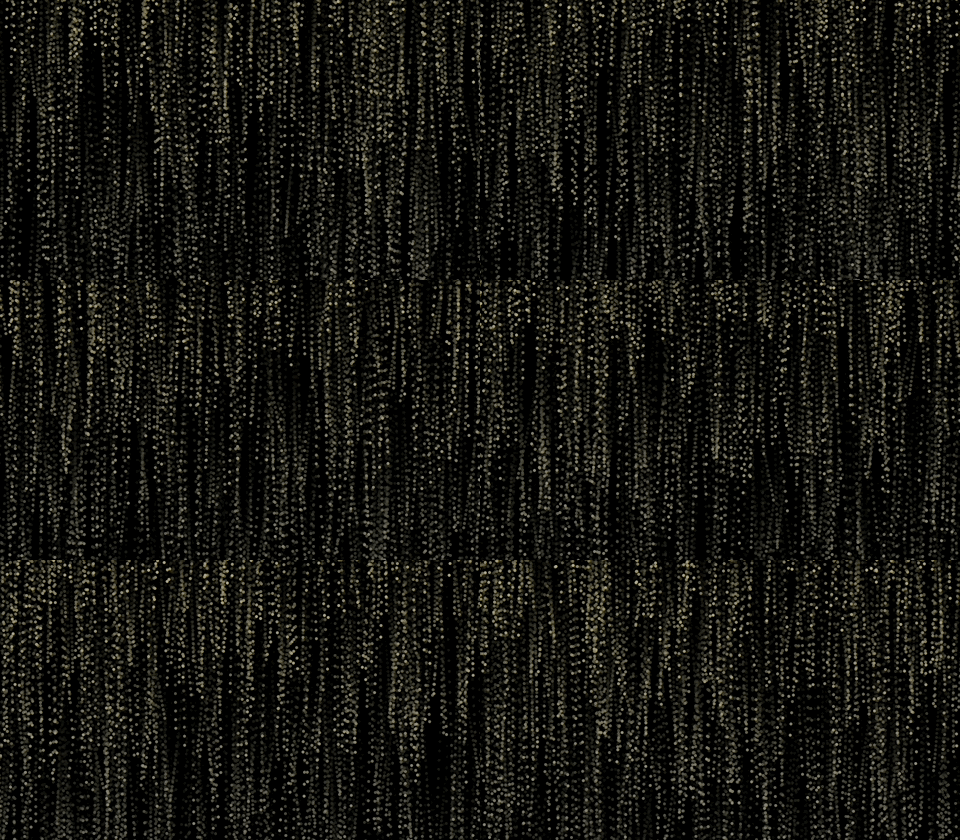
In our project, the vehicle, robot, chair, and interior designers also chose to highlight Cadillac’s design language by emphasizing line-based forms. Inspired by the natural flow of a waterfall, the team sought to create a visual experience that conveys a sense of cascading motion.
As the UX/UI designer, I explored how this waterfall motif could be translated into digital experiences. To maintain consistency with the broader design language, I built the interface and UI system around the waterfall’s most fundamental elements: dots, lines, and vapor. Just like water that adapts to any environment while flowing seamlessly, these elements became a metaphor for the seamless user experiences we wanted to achieve.


Design Enhancement
The style guide was created through close collaboration, where all designers discussed and agreed on the fonts and colors to be used. Building on earlier explorations of the waterfall’s core elements, dots, lines, and vapor, I designed the UI to fit the storyline and its needs. It took significant time to craft a set of guidelines that every designer could truly stand behind, but the most rewarding part was that the final result earned genuine satisfaction from the entire team. Beyond product design, the style guide also became a key resource for poster creation and pitch deck design, ensuring consistency and coherence across all deliverables.
All UI and interactions were then implemented using p5.js. This tool was especially well-suited for quickly expressing the design language of dots, lines, and the flowing feeling of a waterfall. It also allowed us to overlay the UI and interaction behaviors directly on the images created by the product designers, enabling rapid testing and validation of ideas. By using p5.js, we were able to prototype dynamic interactions efficiently while keeping the digital experience aligned with Cadillac’s bold and elegant design vision.
Iteration
Shaping the Future UI
Designing the user experience without knowing what the final product designs would look like was not easy. Targeting the year 2045 made it even more challenging, since it was difficult to predict how the car, living space, robot, and smart chair would ultimately take shape. However, through research and empathizing with users, we were able to identify common ground in how each designer envisioned these spaces and products. For about three to four weeks, I designed the UI based on these shared understandings.
Even within the agreed storyline, choosing specific UI directions was extremely difficult. I generated and shared countless ideas and sketches with the team, and this iterative process played a crucial role in reaching a final consensus. Below, I share a few examples of the iteration steps that shaped the final outcome.
Interface (Before - After)
ETA (Before - After)
Breathing Mode (Before - After)
Solution
Fluid Ecosystem: Cadillac 2045
In the final stage, I designed a waterfall screen that was not just a flat interface, but one that could appear anytime and anywhere. The waterfall screen served as the starting point of Cadillac’s ecosystem connection, signaling its presence while allowing the UI elements to activate on top of it. From this starting point, the AI-driven ecosystem unfolded into a seamless flow, showing how Destiny could work and relax across her car and residence, while also checking routes and arrival times in a unified experience.
Closing
Aligning Ideas Through Visual Exploration
Mid-Project Pivot & Decision Process
New Skills & Application
In this project, the goal was to design user experiences based on an understanding and exploration of future lifestyles. Bringing in existing UI design patterns would have made the work feel outdated, so creating futuristic interfaces and interactions was one of the biggest challenges. The tool that best allowed me to express this vision was p5.js. Within a short time, I was able to learn and apply it, which made it possible to deliver the kind of UI the team envisioned. Looking ahead, I am continuing to develop my skills in Three.js and Blender to demonstrate interactive experiences directly within immersive environments.